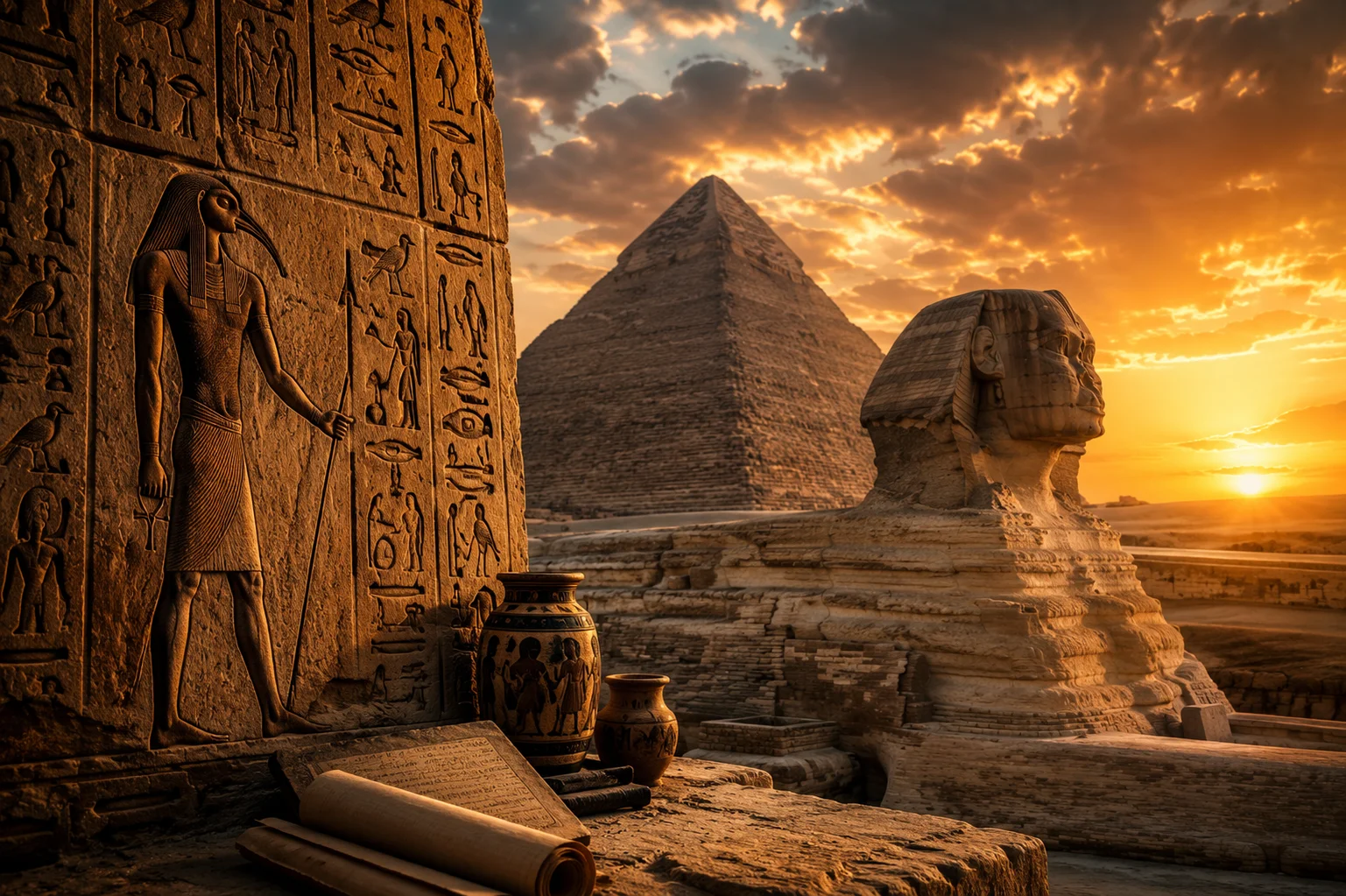
When most people think of ancient Egypt, they picture pyramids, pharaohs, and golden tombs. And sure, all of that is genuinely fascinating. But the real weird facts about ancient Egypt are the ones that almost never make it into textbooks — the strange, surprisingly human, and sometimes laugh-out-loud bizarre details of everyday life in one of history’s greatest civilizations.
These aren’t myths or legends. Every fact below is historically documented and verified. Some will make you nod in recognition of how human people have always been. Others will make you question everything you learned in school.
Let’s get into it.
Table of Contents
Weird Facts About Ancient Egypt: Daily Life Was Stranger Than You Think
1. Workers Were Paid in Beer and Bread
Ancient Egypt didn’t have currency the way we do today. Instead, labourers — including the workers who built the pyramids — were paid in rations of bread and beer. Beer was a staple food, not a luxury. It was thick, nutritious, and considered safer to drink than water in many areas. Archaeological records suggest pyramid builders received around 10 loaves of bread and about 4–5 jugs of beer per day as wages.
So no, the pyramids were not built by slaves. They were built by paid workers who were essentially compensated in sandwiches and craft brews.
2. They Invented the 365-Day Calendar
One of the most overlooked ancient Egypt fun facts is that Egyptians created the foundation of the calendar we still use today. By observing the annual flooding of the Nile and the movements of stars — particularly Sirius — they developed a 365-day solar calendar divided into 12 months of 30 days each, with five extra “epagomenal” days added at the end of the year.
This was over 5,000 years ago. Julius Caesar later reformed it into the Julian calendar, which eventually became the Gregorian calendar that governs our modern lives.
3. Cats Were So Sacred That Killing One Could Mean Death
Everyone knows ancient Egyptians loved cats. But the obsession ran deeper than most realize. Cats were associated with the goddess Bastet, who represented protection and fertility. Killing a cat — even accidentally — was considered a serious crime that could be punishable by death.
When a household cat died, family members would shave off their eyebrows as a sign of mourning. When the cat was buried, it was often mummified and placed in a cat-shaped coffin alongside mummified mice, presumably for snacking in the afterlife.
Strange Ancient Egypt History: Pharaohs Were Weirder Than You Imagined
4. Pharaoh Pepi II Reportedly Smeared Servants in Honey to Attract Flies Away From Him
Of all the bizarre Egyptian facts throughout history, this one stands out. Pharaoh Pepi II, who ruled for an extraordinary 94 years around 2278 BCE, reportedly despised flies so intensely that he kept several naked servants smeared in honey standing near him at all times — essentially using them as living fly traps. Whether this is strictly historical fact or an embellishment, it appears in writings of the era and has been debated by Egyptologists for over a century.
5. Cleopatra Was Not Egyptian
This is one of the unknown facts about Egypt that genuinely surprises people. Cleopatra VII — the famous Cleopatra — was actually of Macedonian Greek descent. She was a member of the Ptolemaic dynasty, which was established by one of Alexander the Great’s generals after he conquered Egypt. Cleopatra was actually the first member of her dynasty to even bother learning the Egyptian language. Her predecessors had ruled for nearly 300 years without speaking it.
6. Tutankhamun’s Parents Were Siblings
The discovery of Tutankhamun’s tomb in 1922 made him the most famous pharaoh in history, but his origins were deeply complicated. DNA analysis published by researchers has confirmed that his parents were full siblings — a product of the royal practice of keeping power within the family. This level of inbreeding likely explains many of the health conditions found in his mummified remains, including bone deformities, a cleft palate, and multiple infections. King Tut died around age 19.
Ancient Egyptian Daily Life Facts That Sound Modern
7. They Had Breath Mints
Ancient Egyptians were obsessed with oral hygiene to a degree that feels surprisingly contemporary. They used a rudimentary form of toothpaste made from powdered ox hooves, ashes, burnt eggshells, and pumice. But they also created early breath mints — small pellets made from frankincense, myrrh, cinnamon, and honey that were chewed to freshen breath. The concept of wanting to smell good on a date is apparently timeless.
8. Women Had Significant Legal Rights
For a civilization that’s thousands of years old, ancient Egypt was remarkably progressive when it came to women’s rights — at least by ancient standards. Egyptian women could own property, initiate divorce, inherit land, enter contracts, and testify in court. This stood in stark contrast to many other ancient civilizations, including classical Greece, where women had almost no legal standing.
Women in ancient Egypt were not considered property. They were legal persons with documented rights and the ability to pursue those rights in court.
9. They Diagnosed Pregnancy With Barley and Wheat
One of the strangest ancient Egyptian history entries involves their method of early pregnancy testing. A woman would urinate on bags of barley and wheat seeds over several days. If the barley sprouted first, it supposedly indicated she was carrying a boy. If the wheat sprouted, a girl. If neither sprouted, she was not pregnant. Remarkably, a 1963 study found that this test was about 70% accurate at detecting pregnancy at all, because pregnant women’s urine promotes seed germination due to elevated estrogen levels. They were onto something.
Egyptian History Trivia: The Surprising Firsts
10. They Invented Bowling
Or something very close to it. A 5,200-year-old game was discovered at an archaeological site in Naqada, Egypt, involving rolling a stone ball down a lane toward pins made of stone. It’s considered one of the earliest predecessors of bowling in recorded history. Not quite ten-pin, but close enough to make every bowling alley feel a little ancient.
11. They Performed Brain Surgery
Skulls with surgical holes — a practice called trepanation — have been discovered in ancient Egypt, indicating that surgeons were drilling into skulls as early as 3000 BCE, sometimes to relieve pressure from head injuries. The Edwin Smith Papyrus, dated to around 1600 BCE but believed to copy texts from much earlier, contains detailed surgical notes describing 48 medical cases — including head injuries, fractures, and dislocations — with a level of clinical precision that astonished modern physicians when it was first translated.
12. The Pyramids Were Originally White and Gleaming
Here’s a fact that genuinely changes the mental image most people have. The pyramids we see today are stripped of their outer casing stones, exposing the rougher limestone beneath. When they were built, they were covered in highly polished white Tura limestone that would have reflected the sun and been visible from miles away — essentially bright white beacons against the desert sky. Some sources suggest they could be seen from as far as the moon on a clear day, though that’s likely an exaggeration. What isn’t an exaggeration is how dramatically different they would have looked.
Unknown Facts About Egypt That Connect to the Bigger World
13. Ancient Egypt Lasted Longer Than the Time Between It and Us
This is an Egyptian history trivia fact that completely rewires your sense of time. The period between the building of the Great Pyramid of Giza (about 2560 BCE) and the fall of Cleopatra’s rule (30 BCE) is roughly 2,500 years. The time between Cleopatra’s death and today is only about 2,050 years. In other words, Cleopatra lived closer in time to us than she did to the construction of the pyramids. Ancient Egypt, as a civilization was so long-lasting that its own history felt ancient to itself.
Final Thoughts
The weird facts about ancient Egypt aren’t weird because the people were strange — they’re weird because they reveal just how complicated, creative, and fully human this civilisation was. They invented calendars, performed brain surgery, paid workers in beer, mourned their cats, and built monuments that still confuse engineers today.
If Egyptian history lit something up in your brain today, you might also enjoy the strange historical details behind World War II or the shocking secrets hidden inside North Korean cities. And for more wild facts from every corner of human knowledge, browse the full History section at The Fact Journal.
History isn’t just dates and wars. It’s people being wonderfully, bafflingly, endlessly strange — and that’s what makes it worth reading.
