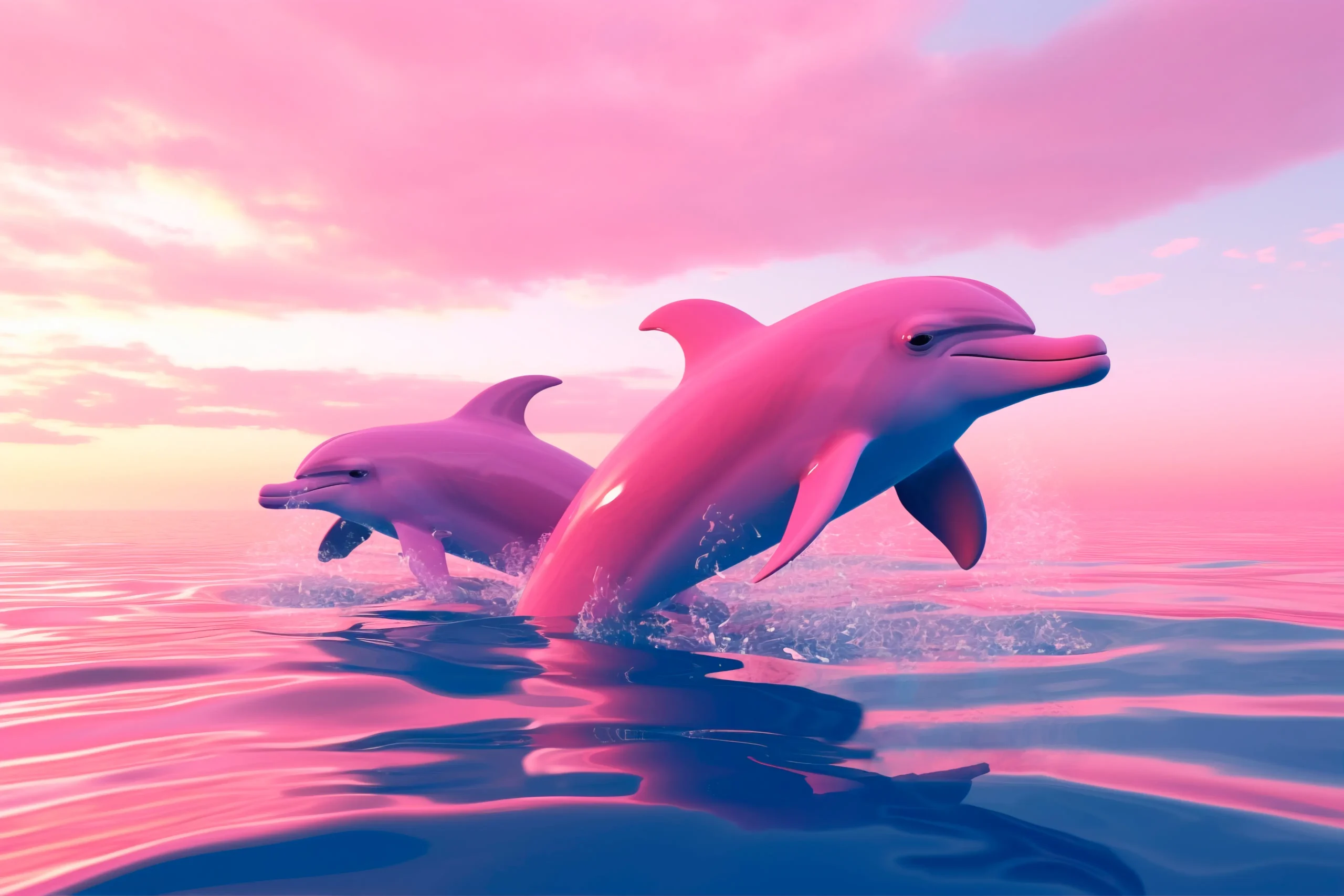
Fun facts about pink dolphins – Think about how it feels to slide on the dark, cloudy river Amazon. It is damp, and the sounds of the rainforest symphony surround you. In a flash, a wave of pink light cuts through the building of water. It is not an illusion of light, but rather the mythic pink river dolphin, something that appears to have been made out of pure magic.
These are not ordinary dolphins, also referred to as the boto. They are freshwater giants, surrounded by native myth, and possess a rather special biology that separates them from their sea-dwelling relatives. When you are okay with adventure, then we shall explore the magical space of these amazing animals. Here are 15 fascinating facts about the pink dolphin that will leave you in awe.
Table of Contents
What is the Pink River Dolphin?
Before we get to our list of interesting facts about pink dolphins, let’s get to know them a little better. The pink river dolphin (Inia geoffrensis) is the largest creature among the river dolphins in the world. They are native to the freshwater river systems of the Amazon and Orinoco of South America. As opposed to marine dolphins, botos have adapted to live in the flooded forests, narrow channels and muddy waters.
1. They Are Unmistakably Pink
This is the most obvious of our fun facts about pink dolphins, but have you ever wondered why they’re pink?
- It is not a pigment: It is not a pigment that gives them a pink colour like a flamingo.
- It is their own skin: It is the colour of their own skin, which is stuffed with blood vessels.
- An indication of movement: The pink colour can become richer as long as the dolphins are active, excited, or even startled, and the blood rushes closer to the surface. Interestingly, they are born grey and are becoming pinker as they grow older.
2. They bear terribly pliant necks.
In comparison with most dolphins, whose necks are fused, the neck vertebrae of pink river dolphins are unfused. This helps them to move their heads 90 degrees side-to-side. This wonderful flexibility is an extraordinary way of adapting to hunting in flooded forests, as they can look around tree roots and go around narrow and intricate hurdles with ease.
3. They Can “Walk” on the Riverbed
The botos are known to walk along the river bottom in a sort of walking motion due to the flexibility of the body and the power of the flippers. They feel the prey in the mud with their paddle-like flippers, and can even swim in water which is very shallow, with their flippers immersed. This is a bottom-feeding behaviour, which is a major aspect of their hunting tactic.
4. They are the Amazon Apex Predators.
The pink dolphin is at the top of the complex food web of the Amazon. Their food source is very varied as it includes more than 50 species of fish. They also have been known to consume crustaceans such as crabs and even small turtles. They have long snouts which contain sharp teeth, and they are ideal for catching their prey in their hiding places.
5. Their brains are 40% larger than ours.
One of the most astounding and interesting facts about pink dolphins is their brain capacity. Their brain is approximately 40% bigger in volume as compared to the human brain. Although the size of the brain does not necessarily signify intelligence, it is a pointer to a highly complex and sophisticated organism. They are highly intelligent, with their encephalization quotient (relative brain size) being second only to humans in the mammalian kingdom.
More Than Just a Pretty Face: Biology and Behaviour
The interesting characteristics and body adaptations of the pink dolphin are equal to the appearance of the dolphin.
6. They possess an inbuilt head sonar.
The melon of the boto, the bulging forehead that all dolphins have, is more particularly huge and plastic. They can bend the form of this melon to target their echolocation clicks and, in effect, use it as a biological sonar dish. This is essential in hunting in the Amazon’s dark, sediment-filled water, where, in most cases, visibility is close to zero.
7. They are to a great extent solitary creatures.
Whereas we tend to imagine dolphins living in large and playful pods, pink river dolphins tend to be loners. They mostly occur alone or in very small groups of mostly a mother and calf. Such individuality probably stems from the mode of hunting, whereby they search the river bottoms to find scattered prey.
8. They are Masters of Disguise (Of a Sort).
It is an unexpected camouflage of the colour of their skin. A bright pink dolphin will be conspicuous to us, but under certain conditions of light, as in the Amazon, where the discolour of the water will be reddish-brown (stained with tannins in the leaves), their pinkish tint may actually assist it to make it less noticeable to its prey and to any possible enemies.
9. They live surprisingly long.
A healthy pink river dolphin has up to 30 years of life in the wild. Their existence, however, is at risk because of human activities such as pollution, loss of habitat, as well as unintentional trapping in fishing nets. Conservation is essential towards the continuity of these spectacular animals in the rivers even to generations.
10. They are Strong Swimmers, but not fast.
Batos are not the dolphin greys of the world, but they are constructed to play around, rather than to run fast. They normally travel with a slow pace of 1.5 to 3.2 miles per hour; however, they may travel faster in short spurts of 14 mph in pursuit or escape. Their large paddle-like flippers are ideal for tight turns around the trees.
Legends, Myths and Cultural Significance.
The pink river dolphin forms a very large part of the cultural life of the people of Amazonia. They are not ordinary animals but mythical ones.
11. They Undergo Shifting in Local Folklore.
One of the most captivating fun facts about pink dolphins is their role in mythology. The boto, according to local legend, is an enchanted creature, an encantado. During the night, particularly on festivals, they are even believed to turn into a well-dressed handsome man who arrives on shore during the night and seduces young women. His hat is the distinguishing mark, as he always covers his blowhole.
12. It’s Considered Bad Luck to Harm Them
Due to the mythical status attached to it, a large number of local individuals feel that it is very unlucky to hurt a pink dolphin because it will bring nothing but bad omen. This cultural taboo has been used in the past as a form of protection for the species. But with the rising pressures in modern society, these traditional beliefs sometimes fail to protect them against new threats.
13. They Feature on Brazilian Currency.
The boto has significance in Brazil on a national scale. The animal appears on the 50 Reais banknote, which is a tribute to the fact that it is a favourite and legendary icon of the fantastic natural heritage of the country.
14. They Are All Too Easy To Be Violent.
Male pink river dolphins, though depicted as tender, are very aggressive when it comes to each other. They also have the marks of fights with competitor, and the weapons they have are their sharp teeth and long snouts. These fights are normally about land or sexual privileges.
15. They belong to a Vulnerable Species.
Our final, and perhaps most important, of these facts about the pink dolphin is a sobering one. The pink river dolphin is declared as Vulnerable by the International Union for Conservation of Nature (IUCN). They are reducing in population because of:
- Destruction of Habitat: River damming and deforestation.
- Pollution: Gold mining and agricultural runoff of mercury.
- Bycatch: Catching up in the fishing nets.
Conclusion: Magic Protection.
The pink river dolphin is not only a specially colored animal. It is a smart and vastly adapted, culturally important symbol of one of the final great wilds of the world. Learning these fun facts about pink dolphins is the first step. The second one is acting to secure their survival.
One of the ways to contribute is by donating to organisations that are devoted to saving the Amazon rainforest and its river systems, like the World Wildlife Fund (WWF) or the Amazon Conservation Association. We can all contribute to the saving of the magic of the boto by purchasing sustainably or by engaging in awareness campaigns.
If you want to explore more fascinating blogs about countries, visit now!
